10 Best Rank Tracking Proxies for SEO in 2026: The Honest Review
If you have ever tried to track keyword rankings manually across different cities or countries, you know the frustration. Google shows you what it thinks you want to see based on your history and location. For an SEO professional, that personalized data is useless.
To get the real picture, you need rank tracking proxies. These tools allow your rank tracker to pretend it is a local user in London, Tokyo, or New York. They bypass Google’s anti-scraping filters and deliver the raw, unvarnished SERP data you actually need.
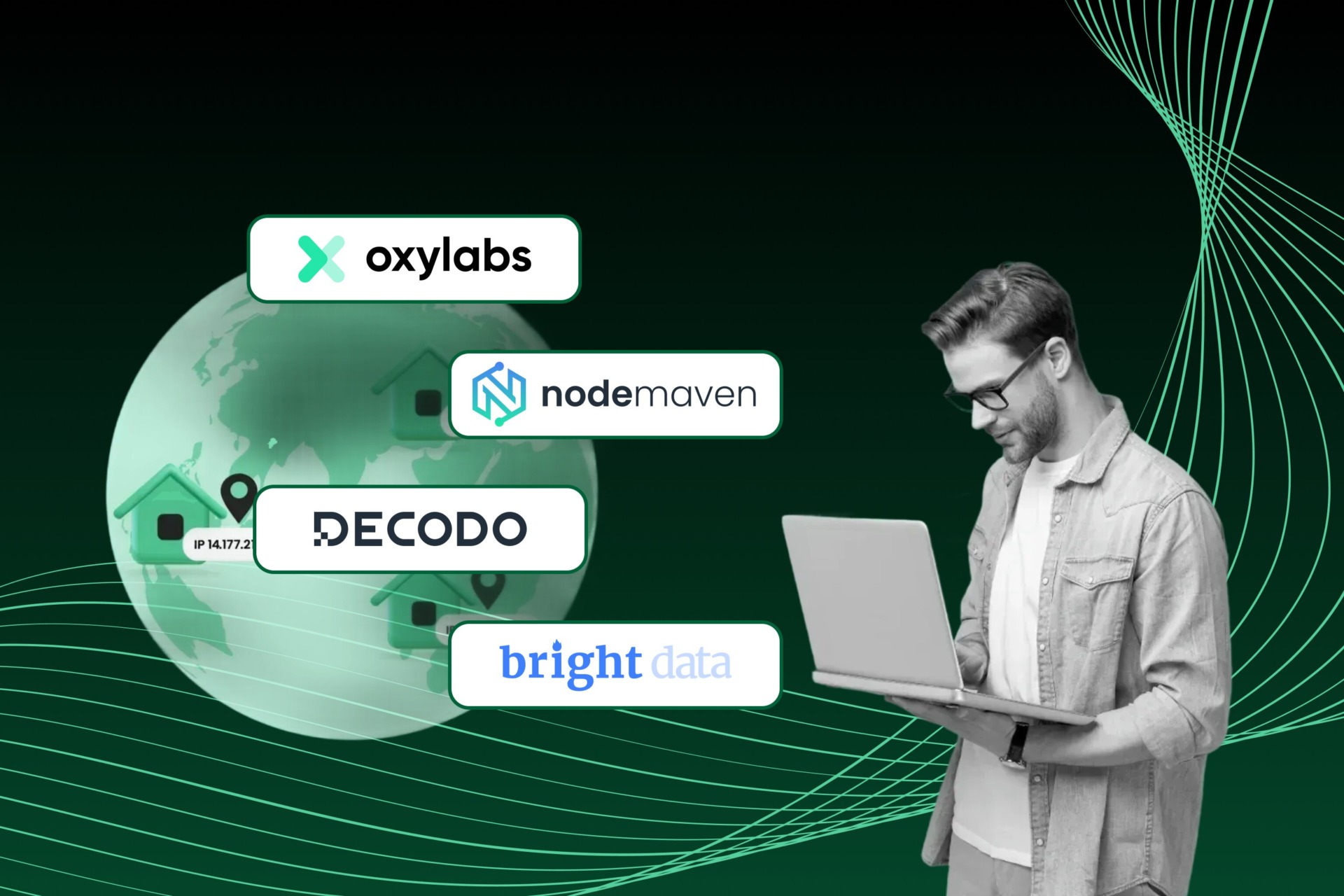
The proxy market is a minefield of “99% success rate” claims that fall apart the moment you start a heavy crawl. This guide cuts through the marketing noise to give you the 10 best rank tracking proxies in 2026, starting with the provider that is currently leading the pack for quality and reliability.
What are Rank Tracking Proxies?
Rank tracking proxies are intermediate servers that sit between your SEO software and search engines. When your rank tracker makes a request, it goes through the proxy first. The search engine sees the proxy’s IP address, not yours.
Why Use Them?
- Bypass Rate Limits: Search engines like Google and Bing will block your IP if they see too many requests in a short window. Proxies rotate your IP so you never hit those limits.
- Hyper-Local Accuracy: If you are ranking for “best pizza in Chicago,” you need to see the results from a Chicago IP. Proxies let you target specific cities and even ISPs.
- Avoid Personalization: Proxies provide a clean slate for every request. This ensures your personal browsing history does not skew the ranking data.
- Scale Your Operations: You cannot track 10,000 keywords from a single office connection. Proxies allow you to run massive, parallel crawls without getting flagged.
1. NodeMaven (The Top Choice for 2026)

Pricing
Key Features
NodeMaven has quickly become the go-to for SEOs who are tired of dirty IP pools. Other providers brag about having 100 million IPs, but most of those are blocked. NodeMaven focuses on a smaller, pre-filtered pool of high-quality residential IPs. For rank tracking, where a single block can ruin a data set, this quality-first approach is a game-changer.
Pros
- IP Quality Filter: They use a proprietary filtering system to remove low-quality and flagged IPs before they ever reach you.
- High Success Rates: Consistently hits 99%+ success rates on Google and Bing.
- Granular Targeting: Supports country, city, and even ISP-level targeting for hyper-local SEO.
- Traffic Rollover: Your unused monthly traffic rolls over to the next month.
Cons
- Smaller Pool: 30M+ IPs is smaller than some giants, though the quality is higher.
- Price: It is not the budget option, but you save money by not paying for failed requests.
Pricing
- Trial: €3.99 for 500MB.
- Monthly Plans: Start at €30/mo for 9GB (using promo codes like NM80).
- Pay-as-you-go: Available for flexible scaling.
Verdict
NodeMaven is the best choice for serious SEO agencies. It is reliable, the IPs are clean, and the traffic rollover means you are not throwing money away on quiet months.
2. Oxylabs

Pricing
Key Features
Oxylabs is the enterprise heavyweight. If you are running a massive SEO platform that needs to scrape millions of pages a day, Oxylabs has the infrastructure to handle it.
Pros
- Massive Network: Over 100 million residential IPs worldwide.
- SERP Extension: They offer a dedicated SERP Scraper API that handles the proxy management and data parsing for you.
- Reliability: Extremely stable connections with dedicated account managers for larger plans.
Cons
- Complex Pricing: Can be confusing for smaller users.
- Expensive: The entry-level plans are significantly higher than boutique providers.
Pricing
- Pay-as-you-go: $8/GB.
- Monthly: Starts at $150/mo for 25GB.
Verdict
The best option for large-scale enterprise data collection. If budget is not your primary concern and you need raw power, Oxylabs is the answer.
3. Bright Data

Pricing
Key Features
Formerly Luminati, Bright Data is perhaps the most advanced proxy network on the planet. They offer everything from basic residential IPs to a fully managed SERP API.
Pros
- Advanced Features: Their Proxy Manager allows for incredibly complex routing and rule-setting.
- Global Coverage: IPs in every country and almost every city on earth.
- Ethical Sourcing: Known for having one of the most transparent and ethical IP sourcing models.
Cons
- Steep Learning Curve: The dashboard can be overwhelming for beginners.
- KYC Process: They have a strict “Know Your Customer” process that can be a hurdle for some.
Pricing
- Pay-as-you-go: $8.40/GB.
- Monthly: Starts at $500/mo for larger enterprise needs.
Verdict
Ideal for technical SEOs who want total control over their proxy infrastructure. Their SERP API is also top-tier if you do not want to manage the proxies yourself.
4. Decodo (Formerly Smartproxy)

Pricing
Key Features
Smartproxy recently rebranded to Decodo, but they remain one of the best middle-ground providers. They offer high-quality residential proxies at a price point that works for freelancers and small agencies.
Pros
- Ease of Use: One of the best dashboards in the industry.
- No-Code Tools: Offers browser extensions and a “Site Unblocker” that makes rank tracking easy.
- Fast IPs: Their residential network is consistently among the fastest in speed tests.
Cons
- Limited Targeting: City-level targeting is available but not as granular as NodeMaven or Oxylabs on smaller plans.
- No SOCKS5 on all plans: Some older integrations might struggle.
Pricing
- Pay-as-you-go: $7/GB.
- Monthly: Starts at $12/mo for 2GB.
Verdict
The best value for freelancers and small teams. It is easy to set up, reliable, and will not break the bank.
5. IPRoyal

Pricing
Key Features
IPRoyal has carved out a niche as the ethical budget provider. They are transparent about where their IPs come from (their Pawns.app service) and offer some of the lowest prices for residential proxies.
Pros
- Affordable: Some of the lowest per-GB rates in the industry.
- Non-Expiring Traffic: Their residential proxy traffic never expires.
- SOCKS5 Support: Great for older SEO tools that require specific protocols.
Cons
- Success Rates: Can be slightly lower than premium providers like NodeMaven.
- Support: Response times can be slower during peak hours.
Pricing
- Residential: Starts at $1.75/GB (if buying in bulk) or $7/GB for small amounts.
Verdict
The best choice for budget-conscious SEOs who need a reliable backup or a low-cost way to run occasional rank checks.
6. Proxy-Seller

Pricing
Key Features
Proxy-Seller is unique because they offer a massive variety of proxy types, including ISP, mobile, and dedicated IPv4/IPv6 proxies. For rank tracking, their ISP proxies are particularly effective.
Pros
- Variety: Huge selection of proxy types and locations.
- ISP Proxies: Their ISP proxies offer the speed of a datacenter proxy with the trust score of a residential one.
- 24/7 Support: Very responsive customer service.
Cons
- Dashboard: A bit dated compared to the modern look of Decodo or NodeMaven.
- Inconsistent Speeds: Some locations perform significantly better than others.
Pricing
- Residential: From $0.70 to $3.50 per GB depending on volume.
Verdict
A solid choice if you need specific types of proxies (like IPv6) or want to experiment with ISP proxies for faster rank tracking.
7. NetNut

Pricing
Key Features
NetNut is known for its direct connectivity to ISPs. They use servers placed directly in ISP data centers instead of relying on a P2P network where someone’s home computer might go offline.
Pros
- Unmatched Stability: Because they do not rely on P2P, the IPs do not drop out mid-session.
- Speed: Extremely low latency, which is great for large-scale SERP scraping.
- Static IPs: Offers static residential IPs that are perfect for managing SEO accounts.
Cons
- Price: Definitely on the higher end of the spectrum.
- Targeting: City-level targeting is not as extensive as some P2P networks.
Pricing
- Monthly: Starts at $300/mo for 20GB.
Verdict
The best choice for users who prioritize stability above all else. If you cannot afford a single dropped connection, NetNut is the way to go.
8. SOAX

Pricing
Key Features
SOAX is a clean, modern provider that focuses on providing a highly customizable proxy experience. They have a very user-friendly interface and a solid global network.
Pros
- Clean Dashboard: Very easy to manage your proxy lists and targeting.
- Reliable Rotation: Their rotation settings are very flexible, allowing for sticky sessions or rotation on every request.
- Good Success Rates: Performs well on Google and other major search engines.
Cons
- Price: A bit more expensive than IPRoyal or Proxy-Seller.
- Trial: No free trial; you have to pay $1.99 for a 1-hour test.
Pricing
- Pay-as-you-go: $4/GB.
- Monthly: Starts at $99/mo for 15GB.
Verdict
A great all-rounder. It does not necessarily lead in any one category, but it does everything well.
9. ProxyRack

Pricing
Key Features
ProxyRack is a long-standing proxy provider offering residential, mobile, and datacenter proxies under a single subscription. For rank tracking, its rotating residential network is the most relevant, providing broad country-level coverage and unlimited concurrent connections.
The service prioritizes simplicity and affordability over precision. While it can handle basic SERP tracking at scale, IP quality and geo-targeting consistency vary by location, which can affect accuracy in competitive markets.
Pros
- Simple monthly pricing
- Residential and mobile proxies included
- Unlimited threads for parallel rank checks
Cons
- Limited and inconsistent city-level targeting
- Mixed success rates during heavy crawls
- No SERP-specific optimization tools
Verdict
ProxyRack works for budget-friendly, country-level rank tracking, but it is not ideal for hyper-local SEO or high-accuracy reporting where clean IPs are critical.
10. MarsProxies

Pricing
Key Features
MarsProxies is a newer player that has gained a lot of traction by offering high-quality proxies at very competitive prices. They are simple, fast, and effective.
Pros
- Speed: Very fast response times for a residential network.
- Simple Setup: No complex rules or configurations; just get your credentials and go.
- Affordable: Very competitive pricing for the quality of IPs provided.
Cons
- Features: Lacks some of the advanced unblocking tools found in Bright Data or Oxylabs.
- Pool Size: Smaller than the industry giants.
Pricing
- Residential: Starts at $4.99/GB.
Verdict
The best no-frills option. If you just want proxies that work without having to navigate a complex dashboard, MarsProxies is a great choice.
FAQ
What are rank tracking proxies?
Rank tracking proxies are intermediary servers used by SEO tools to collect search engine results without revealing the user’s real IP address. When a rank tracker checks keyword positions, the request is routed through a proxy IP, making it appear as if the search comes from a real user in a specific location. This prevents personalization, avoids IP bans, and allows accurate SERP data collection at scale.
Why are rank tracking proxies necessary for SEO?
Search engines aggressively limit automated queries. Without proxies, repeated rank checks quickly trigger CAPTCHAs, blocks, or distorted results. Rank tracking proxies distribute requests across many IP addresses, allowing SEO tools to collect unbiased ranking data while staying within search engine tolerance thresholds. They are essential for agencies, large websites, and anyone tracking hundreds or thousands of keywords.
What type of proxies are best for rank tracking?
Residential proxies are the most reliable option for rank tracking. They use IP addresses assigned to real users by ISPs, which search engines trust more than datacenter IPs. ISP proxies are also effective, combining residential trust with higher speed. Datacenter proxies are cheaper but are often blocked by Google and Bing during sustained rank tracking.
How many proxies do you need for rank tracking?
The number of proxies depends on keyword volume, tracking frequency, and target locations. As a rough guideline, tracking 1,000 keywords daily across multiple locations typically requires several gigabytes of residential proxy traffic per month. High-frequency or city-level tracking increases demand, while weekly checks require significantly fewer resources.
Can rank tracking proxies provide city-level SERP data?
Yes, but only if the provider supports precise geo-targeting. High-quality rank tracking proxies allow targeting by country, city, and sometimes ISP. This is critical for local SEO campaigns, where rankings can vary significantly between nearby cities. Providers with limited geo granularity may return inconsistent or inaccurate local results.
Are free proxies safe for rank tracking?
Free proxies are not suitable for rank tracking. They are often overused, slow, and already flagged by search engines. Using them can lead to inaccurate data, blocked requests, or even bans on your rank tracking tool. Professional SEO workflows require clean, private proxy networks with predictable performance.
How do proxies prevent personalized search results?
Search engines personalize results based on IP address, browsing history, and location. Rank tracking proxies provide a fresh IP with no search history for every request. This ensures that rankings reflect neutral SERP positions rather than results influenced by past searches, logged-in accounts, or geographic bias.
Do rank tracking proxies work for mobile SERPs?
Yes, if the proxy provider supports mobile or mobile-like IPs. Mobile proxies are especially useful for tracking mobile-first rankings, which often differ from desktop results. Some SEO tools also combine mobile user agents with residential or mobile proxies to better simulate real mobile search behavior.
What causes proxies to get blocked during rank tracking?
Blocks usually occur due to poor IP quality, excessive request frequency, or lack of rotation. Low-quality or previously abused IPs are more likely to trigger Google’s anti-bot systems. Reliable rank tracking proxies use clean IP pools, smart rotation, and rate control to maintain high success rates.
Can one proxy provider support multiple SEO tools?
Yes. Most rank tracking proxies can be integrated into multiple tools simultaneously, as long as bandwidth and concurrency limits are respected. Agencies often use the same proxy pool for rank tracking, SERP scraping, and site audits, provided the IP quality is high enough to avoid cross-task contamination.
Final Verdict: Which One Should You Choose?
- If you want the best overall quality and reliability: Go with NodeMaven. Their IP filtering and traffic rollover make them the smartest investment for most SEOs.
- If you are an enterprise running massive crawls: Oxylabs or Bright Data are the only ones with the infrastructure to support you.
- If you are on a tight budget: IPRoyal or Decodo (Smartproxy) offer the best balance of price and performance.
- If you need absolute stability: NetNut’s ISP-connected network is unbeatable.
Rank tracking is only as good as the data you collect. Do not let dirty proxies ruin your SEO reports. Pick a provider that prioritizes clean IPs, and you will spend less time troubleshooting blocks and more time climbing the SERPs.