

Best Ticketmaster Proxy Services: Top 5 Picks for 2026
Getting blocked on Ticketmaster usually isn’t about what you did. It’s about how your connection looks. Reused IPs, datacenter traffic, or location mismatch trigger blocks fast, often without warning.
A ticketmaster proxy helps when it’s built for this platform. Most don’t last. They rotate too often, reuse burned IPs, or break sessions mid-checkout. One flag leads to another, and access disappears again.
This guide focuses only on providers that hold stable residential sessions and survive real Ticketmaster traffic. If you’re tired of losing access right before a drop, these options give you a better shot.
Multilogin: The Best All-in-One Solution for Ticketmaster Proxies
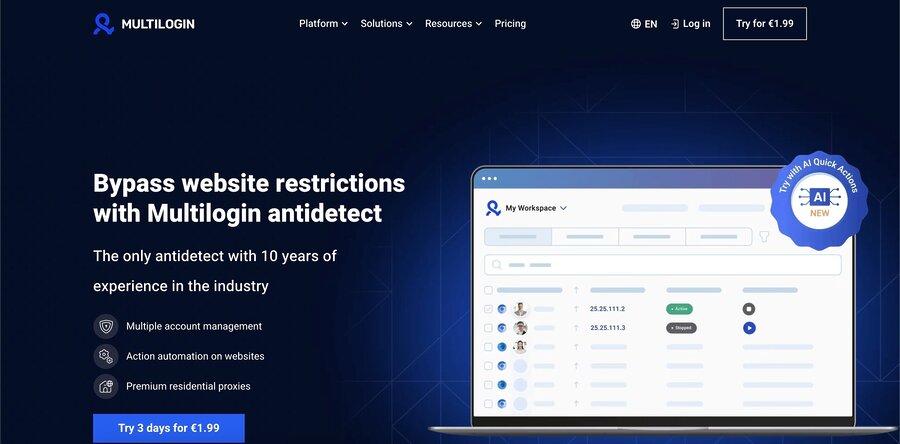
Ticketmaster blocks don’t usually happen at checkout. They happen earlier—when your browser and IP stop lining up. One reused IP, one unstable session, or one fingerprint mismatch is enough to quietly flag everything you do next. This is where Multilogin stands apart from standalone proxy tools.
Multilogin combines a full antidetect browser with built-in residential proxies designed for high-risk platforms like Ticketmaster. You’re not stitching tools together or guessing which IPs are already burned. Every browser profile runs with its own fingerprint and its own proxy, controlled from the same system. That separation is what keeps accounts from bleeding into each other during drops.
For anyone running multiple Ticketmaster accounts, testing queues, or buying across regions, this setup removes the usual failure points. No external proxy dashboards. No session breaks mid-queue. No IP changes that reset your place right before tickets open. Your connection stays stable, and your browser identity stays consistent from start to finish.
Key features for Ticketmaster use:
- 95% IPs with clean records (ideal for new or high-risk LinkedIn accounts)
- 99.99% proxy stability uptime
- 24-hour sticky sessions for safe warm-ups and long outreach runs
- 30+ million premium, pre-filtered residential IPs already vetted for trustworthiness
What makes this cost-effective is consolidation. One subscription replaces the browser, the proxy provider, and the time lost fixing setups that fail at the worst moment. If you’ve already lost access during a Ticketmaster drop, this is the kind of setup that stops the cycle instead of repeating it.
NodeMaven
NodeMaven works well for Ticketmaster because it prioritizes IP quality over volume. Ticketmaster flags reused or low-trust IPs fast, especially during high-demand drops. NodeMaven filters risky addresses in real time, which lowers the chance of hitting queues that never move or sessions that die right before checkout. When timing matters, starting with a clean IP is often the difference between staying in line and getting blocked.
Sticky sessions are another reason it fits Ticketmaster workflows. If your IP changes mid-queue, your session resets and you lose your spot. NodeMaven lets you hold the same residential IP long enough to stay consistent through browsing, queue, and checkout. Bandwidth rollover also helps if your buying activity spikes around specific events instead of running daily.
Key features for Ticketmaster use:
- Real-time IP quality filtering to avoid flagged or recycled addresses
- Stable sticky sessions that hold through queues and checkout
- Bandwidth rollover so unused traffic isn’t lost between drops
- Accurate geo-targeting for region-specific ticket access
- Clean dashboard with fast support when drops are time-sensitive
Decodo
Decodo can be useful when Ticketmaster activity is mixed. Rotating proxies help with browsing events or checking availability at scale, while static IPs are better when you need consistency during queues. The option to switch between the two matters, because Ticketmaster reacts differently to short bursts of traffic versus long, steady sessions.
That said, this setup works best when you’re careful about how you use it. Rotating IPs during queues can reset sessions, so static IPs are the safer choice for checkout. Decodo fits lighter or mixed workflows more than high-pressure drops.
Key features for Ticketmaster use:
- Residential proxies with both rotating and static options
- Static IPs suitable for longer Ticketmaster sessions
- City-level targeting for regional access checks
- Fast response times for bulk browsing
- Simple setup without advanced session controls
Oxylabs
Oxylabs is built more for scale than precision Ticketmaster buying. Its strength is large-volume access and detailed targeting, which can help with research, availability checks, or monitoring events across regions. The network filters weak IPs before use, which reduces immediate blocks, but the setup is heavier than what most buyers need.
For direct Ticketmaster queues and checkout, the size of the network is less important than session stability. Oxylabs works better as a supporting tool than a primary buying setup.
Key features for Ticketmaster use:
- Large residential proxy pool
- Advanced geo-targeting options in some regions
- Pre-filtered IPs to reduce low-trust addresses
- API-based dashboard for usage control
- Infrastructure focused on data-scale use cases
IPRoyal

IPRoyal sits in the middle ground. It offers both rotating traffic and dedicated residential IPs, which can help if you want an address to stay consistent over several days. Dedicated IPs reduce the risk of session resets, while rotation is better suited for non-queue tasks like browsing or testing access.
It’s flexible, but not optimized specifically for Ticketmaster drops. Results depend heavily on how carefully sessions are managed.
Key features for Ticketmaster use:
- Rotating and dedicated residential proxies
- Dedicated IPs reserved for single users
- Traffic that doesn’t expire
- Basic session and rotation controls
- API access for quick integration
Residential vs Datacenter Proxies for Ticketmaster
Datacenter proxies are usually where Ticketmaster problems begin. They’re fast and cheap, but they don’t look like real users. Ticketmaster knows these IP ranges well. You might load a few pages, maybe even see seats, then the block hits. Queue resets. Captcha loops. Access gone. If you’ve already been banned once using datacenter IPs, switching browsers or clearing cookies won’t fix it. The signal is already burned.
Residential proxies behave differently because they come from real household connections. That matters on Ticketmaster. When your IP looks like it belongs to a normal person checking events from home, sessions last longer. Queues hold. Pages don’t refresh themselves into errors. If you keep getting blocked during drops, the first move is simple: stop using datacenter proxies entirely.
The trade-off is control. Residential proxies cost more and need to be handled carefully. Rotation during a queue will break your session just as fast as a bad IP. Sticky sessions are not optional here. If your goal is to stay in line and reach checkout, residential IPs with stable sessions are the only option that consistently works on Ticketmaster.
How to Choose a Ticketmaster Proxy
Choosing a Ticketmaster proxy isn’t about chasing features. It’s about avoiding the same mistake twice. Most people get banned, switch providers, and jump back in without fixing the real problem. That’s why the block comes back even faster. Ticketmaster remembers patterns, not promises.
Start with IP type. If you’re using datacenter proxies and keep losing access, stop. That path is closed. Residential IPs are the baseline, not an upgrade. They give you a chance to stay in session long enough to matter. If your IP changes while you’re in a queue, your place is gone. So look for sticky sessions first. If a provider can’t hold an IP through browsing, queue, and checkout, it won’t work here.
Next, check how IPs are handled before you ever connect. Recycled or low-trust addresses are silent killers. You won’t always see an instant block. Sometimes the page just slows down. Sometimes the queue never moves. If that’s happening, rotate out immediately. Don’t retry on the same setup. Swap the IP, reset the browser profile, and start clean.
Finally, think about control, not speed. Fast proxies don’t help if they break sessions. You need consistency. One browser. One IP. One location. If you’ve already been flagged, that separation is how you stop the damage from spreading. A good Ticketmaster proxy doesn’t feel powerful. It feels invisible. That’s how you know you chose right.
Read more about the Top 10 Ticketmaster alternatives!
FAQ
What is a Ticketmaster proxy?
A ticketmaster proxy routes your connection through a different IP address so Ticketmaster sees you as a regular user from a specific location. It helps reduce blocks caused by reused IPs, datacenter traffic, or mismatched location signals.
Can Ticketmaster detect proxies?
Yes. Ticketmaster actively detects datacenter IPs, recycled residential IPs, and unstable connections. Proxies that rotate during queues or come from low-trust ranges are flagged quickly, often before checkout.
Are residential proxies better than datacenter proxies for Ticketmaster?
Yes. Residential proxies come from real household connections, which Ticketmaster trusts more. Datacenter proxies are cheaper but are often blocked early, especially during high-demand drops.
Why does my Ticketmaster queue reset when using a proxy?
Queue resets usually happen when your IP changes mid-session. If your proxy rotates or drops during the queue, Ticketmaster treats it as a new connection and sends you back to the start.
Can I use one Ticketmaster proxy for multiple accounts?
You can, but it’s risky. Sharing the same IP or browser fingerprint across accounts increases the chance that one flag affects all of them. The safer setup is one browser profile and one proxy per account.
Conclusion
If Ticketmaster keeps blocking you, the fix usually isn’t “try again.” It’s changing the signals that got you flagged in the first place. A ticketmaster proxy only works when it gives you two things at the same time: clean residential IPs and stable sessions that don’t change mid-queue. That’s why the winners for 2026 aren’t the cheapest options or the biggest networks. They’re the ones that keep your session consistent when the drop goes live.
If you want the lowest-friction setup, Multilogin is the strongest all-in-one choice because it ties proxy and browser identity together. If you already have your own stack and mainly need higher IP quality, NodeMaven is a strong pick. The other providers can help for supporting tasks like browsing, availability checks, or region testing, but they’re less reliable as a primary setup for high-pressure drops.