

The Best VPN for China: A Complete Guide for 2026
If you are planning to go to mainland China or doing business, you need to be prepared. Chinese internet differs from the rest of the world. Many of the websites and apps (for example Facebook, Instagram) you use every day are blocked, because of a system of censorship. To break it, you need a Virtual Private Network, or VPN.
For users who rely on alternative routing or proxy-based access methods, specialized proxy setups can sometimes provide additional flexibility alongside VPN solutions.
Finding the best VPN for China is not easy. There is the system that blocks content, known as the Great Firewall (GFW). This system is getting stronger constantly. VPN that worked last month might not work today. This guide gives you the most current, reliable information and instruments for 2026.
Why You Need a VPN for China
The Great Firewall is a complex system. It uses advanced technology to control internet space. It blocks access to thousands of foreign websites and services. This is more than just a simple filter. It uses Deep Packet Inspection (DPI) to look at your internet traffic. If it find a standard VPN connection, it shuts it down.
Understanding how network inspection and behavioral detection work is important when choosing tools that must avoid traffic-based blocking systems.
What exactly does the GFW block? The list is long and includes many essential services.
| Category | Blocked Services and Websites |
|---|---|
| Search & Information | Google, Google Maps, Gmail, Wikipedia |
| Social Media | Facebook, Instagram, Twitter (X), WhatsApp, Telegram |
| News & Media | The New York Times, BBC, Reuters, YouTube |
| Workspace | Dropbox, Slack, most cloud services |
Without a VPN, you cannot use your email, scroll social media, or use Google services to search for information. You will be isolated from the global internet. The only way to bypass these blocks is a reliable VPN. The main task of VPN is to hide your online activity by making it look like you are browsing from outside of China.
Best VPN for China in 2026
The most important factor for a VPN in China is reliability. Speed and price go after.
Here are the top five VPNs that are currently working well in China:
1. Astrill VPN
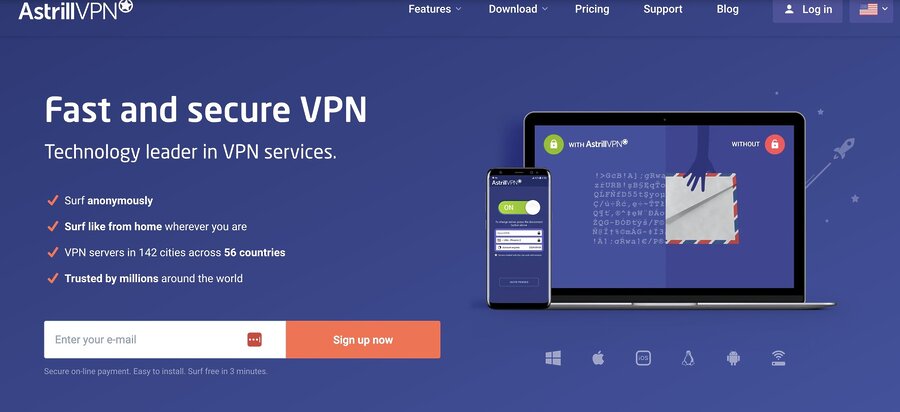
Astrill is a must-have VPN in China for years. As always one of the best products doesn’t cost cheap but it is one of the most reliable. Many users rely on it because it almost never fails.
Pros:
- Unmatched reliability: it works during major political events when other VPNs fail.
- Fast speeds: excellent performance for streaming and downloading.
- Dedicated China support: customer service team is highly knowledgeable about the censorship system.
Cons:
- High price: It is one of the most expensive VPNs on the market.
- Fewer features: The app interface is basic compared to some competitors.
If your work or travel depends on a constant, stable connection, Astrill might be a good choice.
2. LetsVPN
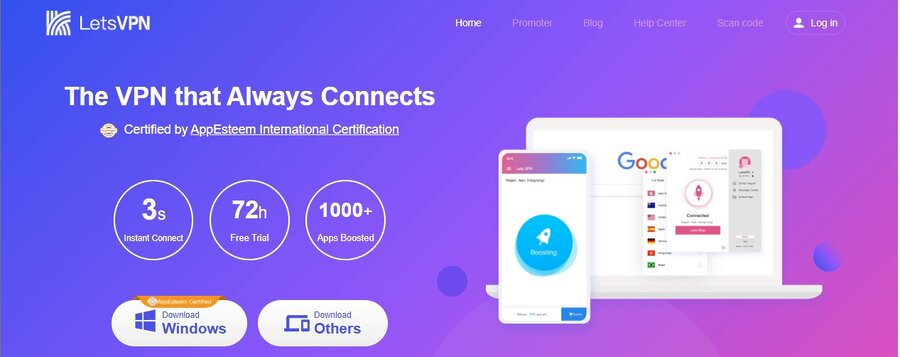
LetsVPN has become extremely popular in the last few years. It is a great choice for travelers who want a simple, “set it and forget it” solution.
Pros:
- Exceptional speed: users consistently report very fast connection speeds.
- Simple interface: perfect for beginners; no complex settings to worry about.
- Affordable: much cheaper than Astrill, making it a great value.
Cons:
- Privacy Concerns: a Chinese-developed service, which raises questions for some privacy-focused users.
- IP Leaks: users have reported that their IP address still appears to be in China for certain services, like Spotify.
This is a strong recommended VPN for China for tourists and businessmen. It offers great speed and ease of use at a lower cost.
3. Surfshark
Surfshark is a strong contender that offers excellent value. It is one of the few top VPNs that allows unlimited parallel connections. This is perfect for families, companies, or people with many devices.
Pros:
- Unlimited devices: connect as many devices as you want with a single subscription.
- Strong security: uses AES-256 encryption and a reliable kill switch.
- Affordable long-term plans: excellent price point if you sign up for a two-year plan.
Cons:
- Inconsistent connection: while generally reliable, it can be less stable during peak blocking periods.
- Manual setup: you often need to manually enable the NoBorders mode or connect to a specific server.
4. Mullvad VPN
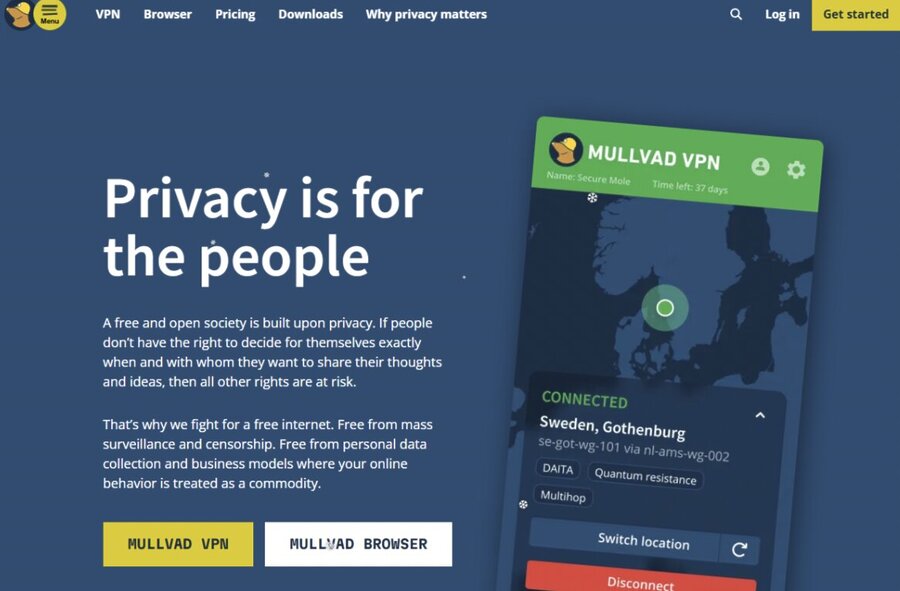
Mullvad has a strict no-logs policy and even lets you pay anonymously with cash or cryptocurrency. For use in China, it requires a bit more technical knowledge.
Pros:
- Ultimate privacy: zero-logs policy and anonymous payment options.
- Fixed price: simple, low monthly price with no long-term contracts.
Cons:
- Complex setup: requires manual configuration of obfuscation settings before you enter China.
- Slower speeds: the obfuscation methods can sometimes slow down the connection.
5. ExpressVPN

ExpressVPN is often ranked as the world’s best VPN. It is fast, secure, and has a huge network.
Pros:
- Incredibly fast: one of the fastest VPNs globally when it is connected.
- Easy to use: very polished apps for all major platforms.
- 30-day guarantee: you can test it risk-free for a month.
Cons:
- Frequent blocks: a high-profile target for the GFW, leading to more frequent connection issues.
- Expensive: one of the priciest products.
ExpressVPN is a solid backup or a great choice if you are only visiting for a short time. Its 30-day money-back guarantee means you can try it out without risk.
Advanced Solutions: Taking Control of Your Connection
For power users, long-term residents, or small businesses, relying on commercial VPNs can sometimes be risky. The GFW is always adapting. A more strong solution is to set up your own private, self-hosted proxy.
This involves renting a cheap Virtual Private Server (VPS) outside of China. Then you install a sophisticated proxy protocol on it. The most popular and effective protocols right now are V2Ray (using Vless and Reality) and Shadowsocks.
This setup is especially useful for businesses running international tools, automation, or multi-account workflows, where stable access is critical. In these cases, pairing a private proxy with an antidetect browser like Multilogin helps maintain consistent sessions, separate digital identities, and stable routing — reducing the risk of blocks, captchas, or account flags.
1.V2Ray (Vless + Reality)

This is the current gold standard for bypassing the GFW. It is a complex setup, but it is highly effective. The GFW cannot block it without also blocking a legitimate, essential service. This makes it a very low-risk target.
2.Shadowsocks
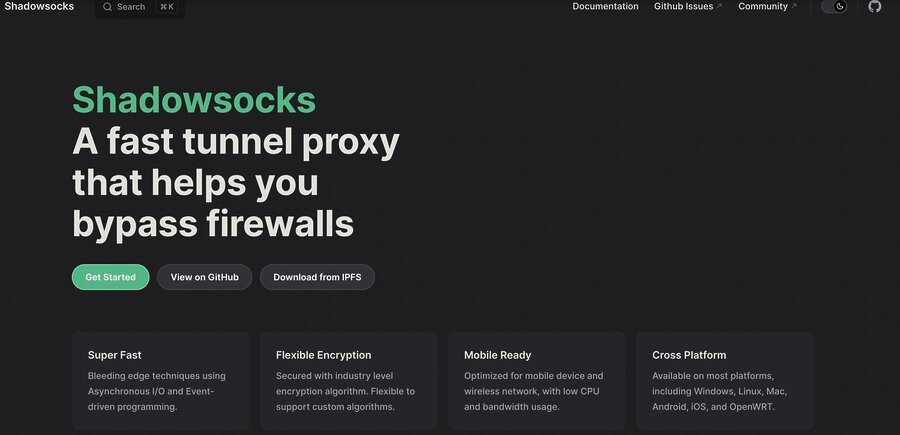
Shadowsocks is an open-source, encrypted proxy project. This is not a true VPN, but it works like one for bypassing censorship. It is simpler to set up than V2Ray, and it’s also very fast and reliable.
Why Self-Hosting is Better:
- Low Profile: your server is not a known VPN IP address, so it is less likely to be blocked.
- Full Control: you control the protocol, the server location, and the updates.
- Cost-Effective: once set up, the monthly cost is only the price of the VPS (often less than $5 per month).
The Downside: This option requires technical skill. You need to be comfortable with the command line and server maintenance. If you are not a tech-savvy user, stick to the commercial VPNs listed above.
Focus on Ease of Use and Pre-Deployment Setup
The most reliable solution is always the one set up before entering the restricted network environment. Most VPN provider websites and app stores are blocked inside mainland China. That means you won’t be able to download or configure tools after arrival — or after your team is already on the ground.
Proper pre-deployment setup ensures uninterrupted access to essential tools, services, and communication platforms.
Your Pre-Setup Checklist:
- Choose a VPN: Select one of the top five options based on your needs (reliability, speed, or budget).
- Download the App: Install the app on all required devices — employee laptops, work phones, tablets, or travel devices.
- Test the Connection: Connect to a server outside your country to confirm stable performance.
- Run a Connectivity Check: Verify your external IP and routing setup using the Pixelscan checker.
- Save Backup Info: Write down the alternative connection methods or manual setup instructions provided by your VPN. This is your lifeline if the main app fails.
For most users paid VPN services like Astrill or LetsVPN offer the simplest and most reliable experience. They handle the technical complexity in the background, so you can focus on work or travel instead of troubleshooting connectivity.
FAQ
Is there a reliable free VPN for China?
The short answer is no. A truly free VPN for China is almost always unreliable. The Great Firewall is too powerful for free services to consistently bypass. Free VPNs also lack the resources to constantly update their stealth technology. They are often blocked quickly. If a free VPN does work, it usually has severe limits on speed or data. This makes it useless for streaming or video calls.
What is the best free VPN for China if I am desperate?
If you want to use a free option, look for services that offer a free tier with obfuscation. Windscribe offers a free 10GB per month. Proton VPN also has a free tier, but its reliability in China is very inconsistent. The possible “free” option is to use the 30-day money-back guarantee offered by a paid service like ExpressVPN or NordVPN. You pay upfront, use it for your trip, and then request a full refund. However, this is only relevant for temporary visits.
What makes a good VPN for China different from a regular VPN?
A good VPN for China must have specialized technology to bypass the GFW. A regular VPN uses standard protocols like OpenVPN or IKEv2. The GFW can easily detect and block these. A VPN that works in China must use (stealth protocols) to hide the fact that you are using a VPN at all. This is a costly feature that only the top providers can maintain.
Which is the most recommended VPN for China by expats?
For years, the most recommended VPN for China by long-term expats has been Astrill VPN. Its high price is justified by its near-perfect uptime and reliability. However, has quickly become a strong second choice due to its speed and ease of use. The recommendation often comes down to budget versus stability.
Why do I need a VPN for China if I only use my phone?
The GFW blocks apply to all devices, including your phone. You need a to access apps like WhatsApp, Instagram, and your foreign email client. Even if you use a local SIM card, your internet traffic is still routed through the GFW. A VPN is essential for maintaining communication and access to your normal digital life.
If you also plan to access international shopping or service platforms from China, you may encounter additional localization barriers beyond internet restrictions.
Conclusion
Navigating the internet in China requires preparation. The best VPN for China is one that is reliable, fast, and uses advanced stealth technology. While the landscape is always changing, services like Astrill, LetsVPN, and Surfshark have proven their ability to adapt.
It is not recommender to rely on free services. They will likely fail when you need them most. Invest in a quality, paid VPN and don’t forget to test and check your setup before usage with Pixelscan. This simple step ensures you stay connected to the global internet, making your time in China much smoother and more productive. Choose your service, download the app, and enjoy unrestricted access.